

My Vision for Binastra Land
I can already picture Binastra Land in the next decade: a living, breathing place where nature, technology and community design come together to create something more than just a township.
For me, Binastra Land is not only an address — it is a model of how sustainable growth can be delivered in Malaysia, with ASEAN sensibilities and a heart that cares for people and place. I want to share how I think it will evolve, what it will offer, and why we should all stay informed and engaged as it unfolds.
Smart Infrastructure and Green Technology
Net-zero buildings
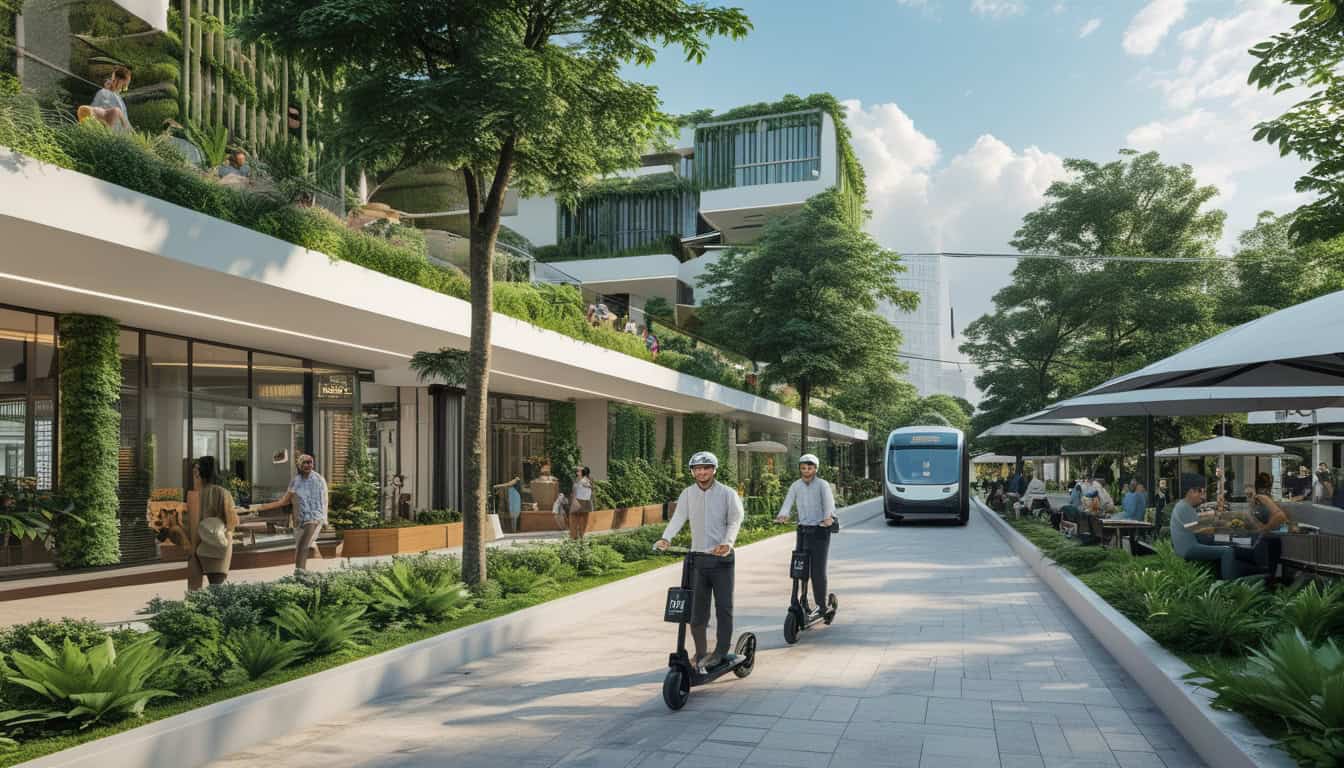
I expect Binastra Land to lead with net-zero building standards: designs that harvest solar, recycle water, and recover energy from waste. Architects and developers will specify materials that reduce embodied carbon, while smart façades adapt to sun and rain. When I walk through the future neighbourhoods, I imagine rooftop gardens and shaded walkways that keep temperatures down tanpa heavy air-conditioning, saving energy and making the place more liveable.
Integrated mobility
Binastra Land’s mobility will be about choice and convenience. I predict electric shuttle loops, protected cycling lanes and pedestrian-first streets that make short trips pleasant. Mobility-as-a-service platforms will connect residents to regional transit hubs, lowering car dependency. For me, the joy will be small: being able to ride a bike to a market, or call a shared electric van when I need to go farther, all within a few taps.
Digital backbone
Digitisation will underpin daily life in Binastra Land. A resilient digital backbone — high-speed connectivity, open data portals and localised services — will let residents monitor energy use, book shared facilities and access telehealth and e-learning. I see community dashboards where we track progress on sustainability targets together, making the future transparent and collaborative.
A Thriving Community and Culture
Inclusive neighbourhoods
Binastra Land will be planned for diversity: affordable housing, multigenerational units and communal spaces that encourage interaction. I imagine kampung-style gatherings reinterpreted for modern life, with shared kitchens, co-working hubs and common gardens. When I visit, I want to feel that everyone belongs — from young professionals to elders who have lived here for decades.
Education, arts and local enterprise
Culture will be central. I foresee local learning centres, maker spaces and artist residencies embedded in the masterplan. These will fuel creativity and micro-enterprise: cafés that sell community-made crafts, pop-up markets, and social incubators that help residents scale ideas. I’m excited by the prospect that Binastra Land will nurture home-grown talent while celebrating Malaysian and ASEAN cultural threads.
Economic Model and Opportunities
Sustainable industries
Binastra Land’s economy will emphasise sustainability-focused sectors: renewable energy services, circular-economy startups and green construction. I predict clusters of businesses offering retrofitting, urban farming and waste-to-resource solutions. This concentration will attract investment and skilled workers, creating a virtuous cycle where good jobs support a resilient local economy.
Jobs of the future and entrepreneurship
For me, the most inspiring outcome is the breadth of career paths Binastra Land can offer. Beyond traditional roles, I expect demand for skills in data analytics for city systems, community management, eco-design and creative industries. Entrepreneurship will thrive through accessible co-working spaces, micro-grants and mentorship — enabling residents to test ideas without leaving their neighbourhood.
Governance, Resilience and Roadmap
Participatory governance
I believe Binastra Land will be governed differently: more participatory, more accountable. I imagine regular community assemblies, digital surveys and resident boards that influence budgeting and design choices. This participatory approach will help ensure decisions reflect local needs, and that development is not just top-down but co-created.
Climate resilience and long-term planning
Resilience will be baked into planning. Binastra Land will use green infrastructure — rain gardens, floodable parks and permeable surfaces — to manage extreme weather, while heat-resistant planting and microclimate design reduce urban heat. I see long-term planning that integrates scenario modelling, so we can adapt to rising sea levels, shifting rainfall patterns and other climate realities.
My call to stay informed
Finally, I want to invite you to keep watching Binastra Land’s journey. Change won’t happen overnight, but by staying informed, asking questions and participating where we can, we shape how it turns out. I’m optimistic — with humility and hard work, Binastra Land can become a beacon for sustainable, people-centred development in Malaysia and beyond. Let’s follow its story together, lah — because our future here is one we build, step by step.