

What Pilates Barre Is and Where It Came From
When you look at pilates barre, you are really seeing the meeting point of two fitness traditions with different histories but similar goals: control, alignment, and efficient movement. Pilates began in the early 20th century through Joseph Pilates, whose method focused on core strength, breathing, posture, and precise body mechanics. Barre, on the other hand, drew inspiration from ballet training, using a ballet-style barre as a support for small, repeated movements that build muscular endurance. Related source: https://la-pilatesstudio.com/barre-pilates/.
Over time, these two approaches started to overlap in studios and group classes. Fitness instructors saw that Pilates offered strong foundational conditioning, while barre added a rhythmic, low-impact way to challenge balance and stamina. The result was a blended format that felt accessible to beginners but still offered enough refinement for more experienced practitioners.
From a historical point of view, pilates barre reflects a broader trend in modern fitness: taking ideas from specialised disciplines and combining them into practical, time-efficient workouts. You can think of it as part of the shift from traditional single-method exercise systems to hybrid classes designed for everyday people with busy schedules.
How Pilates Barre Developed Into a Modern Workout
The growth of pilates barre was shaped by the rise of boutique fitness studios and the increasing popularity of group classes. As more people looked for workouts that felt structured but not overly intense, instructors began blending Pilates mat work with barre-style pulses, holds, and isometric exercises. This made the format easier to market as both strengthening and posture-friendly.
You will often notice that pilates barre classes borrow the language of ballet, even when no dance background is required. Terms such as plié, turnout, and small range-of-motion work became part of the class vocabulary because they help frame the movement style. At the same time, Pilates principles such as neutral spine, core engagement, and controlled transitions kept the workout grounded in disciplined body awareness.
This combination helped pilates barre spread across gyms, studios, and online platforms. It suited people who wanted a low-impact routine that still felt challenging. In many ways, its rise mirrors the modern preference for workouts that improve strength, stability, and posture without demanding heavy equipment or high-impact jumping.
What You Actually Do in a Pilates Barre Class
Core and posture-focused movement
In a pilates barre class, you usually begin with exercises that wake up the core, hips, and back. These movements are often small, precise, and controlled, which means you are expected to pay close attention to alignment rather than speed. The goal is to train the body to stabilise itself more efficiently during movement.
This is where the Pilates influence becomes obvious. You are likely to spend time engaging deep abdominal muscles, maintaining a long spine, and coordinating breath with movement. Even simple exercises can feel demanding because the emphasis is on control and consistent form.
Barre-based holds and pulses
The barre element typically introduces isometric holds, tiny pulses, and repeated lower-body work near or at a barre, chair, or wall. These exercises may look small, but they can create a strong muscular burn because the muscles stay under tension for longer periods. That is one reason the format became so popular among people seeking efficient conditioning.
You may also see sequences that target the thighs, glutes, calves, shoulders, and arms. The pace is usually steady rather than explosive, so you can focus on endurance and muscle control. For many people, that makes the class feel more manageable than fast-paced cardio while still being physically demanding.
Flexibility, balance, and recovery
Most pilates barre sessions end with stretching or mobility work to help the body recover and maintain range of motion. Because the class combines repeated holds with controlled transitions, stretching at the end can feel especially useful. It also supports better posture and smoother movement patterns over time.
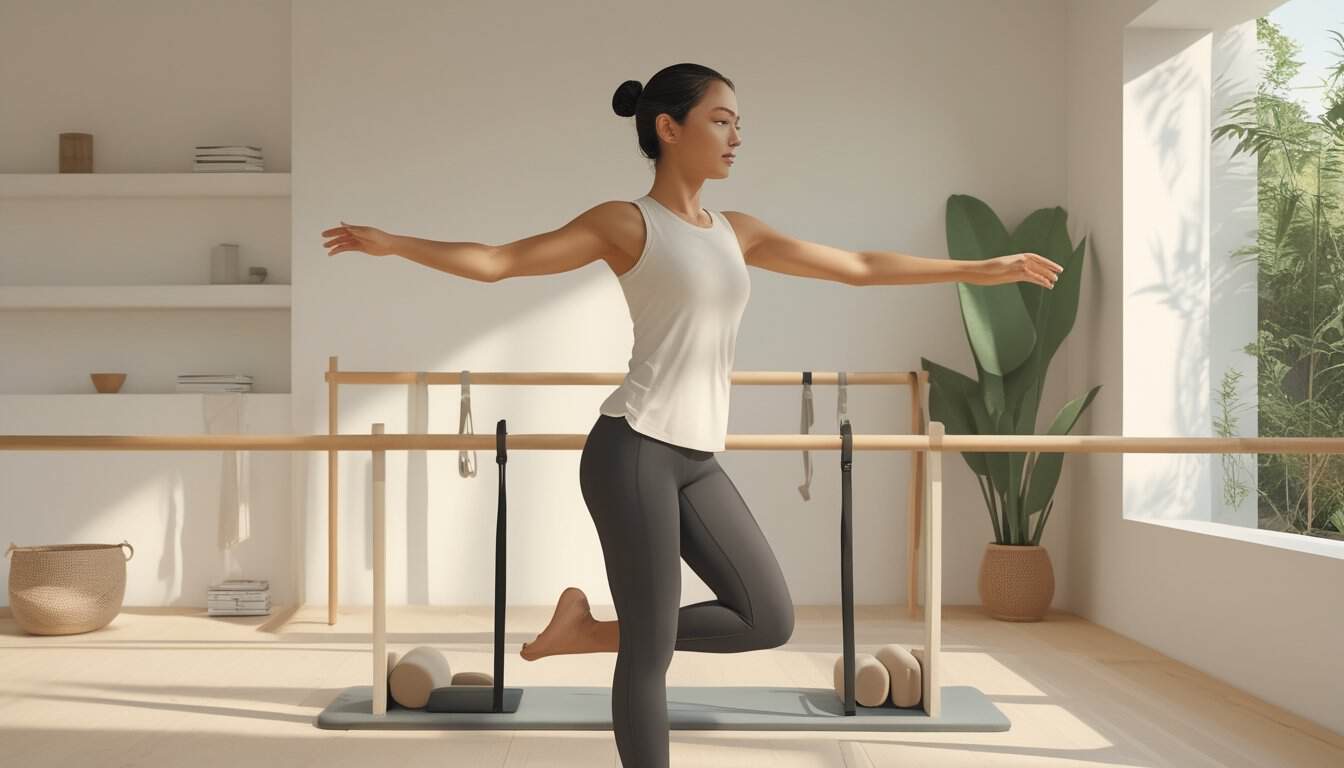
Balance work is another common feature. Whether you are standing on one leg, shifting weight slowly, or moving through a sequence with minimal support, you are training coordination as much as strength. That is one reason pilates barre is often seen as a skill-building workout rather than just a calorie-burning class.
Why Pilates Barre Remains Relevant Today
What keeps pilates barre relevant is its adaptability. It can be made gentler for beginners, more intense for advanced clients, or modified for people returning to exercise after a break. Because the movements are usually low impact, it appeals to people who want joint-friendly training without giving up a sense of challenge.
It also fits well into contemporary fitness culture, where people often look for workouts that improve how they move in daily life. Better posture, stronger stabilising muscles, improved balance, and greater body awareness are all practical outcomes you can work towards through regular practice. In that sense, pilates barre is not just a trend; it is part of a longer history of exercise methods evolving to meet changing needs.
If you are trying to improve skill rather than just finish a workout, pilates barre offers a clear path. The class structure encourages you to refine technique, notice alignment, and build strength with patience. That makes it useful for anyone who wants a disciplined, historical blend of movement traditions that still feels current in today’s fitness landscape.